
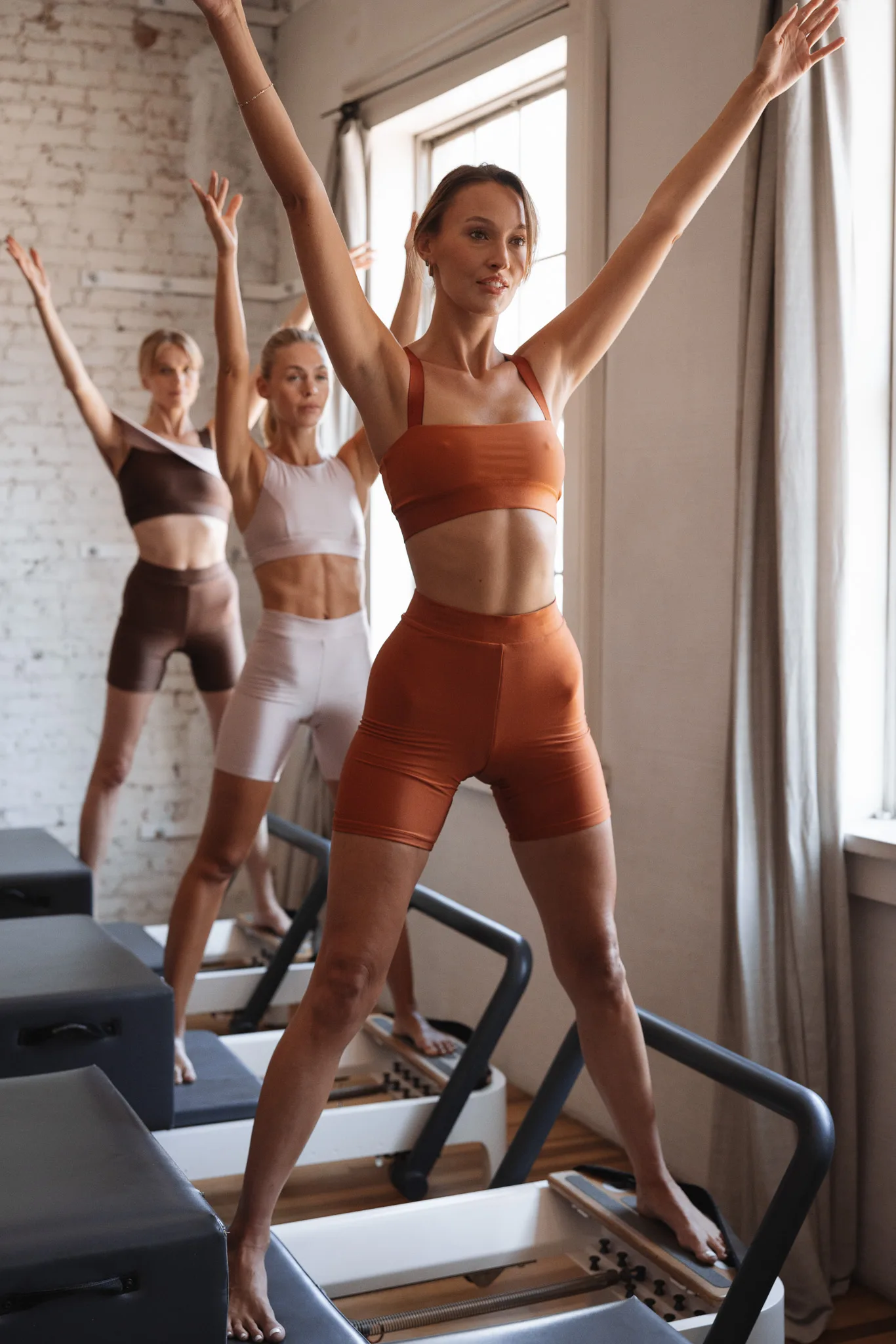
How long does it take to notice reformer Pilates results? Start by asking what kind of change you mean, and how much practice you have actually done. Feeling stronger, moving with more control, and seeing a change in the mirror do not all follow the same timeline.
At New York Pilates, we want you to notice the whole picture: how you carry yourself, how you feel after class, and how confidently you move through your day. A visible change can be part of your goal. It does not have to be the only evidence that your practice is working.
Some results arrive as a feeling
Sometimes progress is something you feel before it is something you photograph. You may notice that you sit or stand more comfortably, leave class in a better mood, or feel more energetic. Confidence can grow as unfamiliar equipment becomes familiar and a teacher’s cue starts to make sense.
In our view, building a routine matters here, too. Returning to the reformer gives you time to connect with your body and recognize your habits. Notice when your shoulders tense, when you hold your breath, or when you can move without rushing. Those discoveries belong in your definition of results.
Count the classes, not just the calendar

“I’ve been coming for a month” is a starting point for a conversation. The next question is how many times. Four classes and twelve classes both fit inside a month, but they represent very different amounts of practice.
A month of frequent attendance and three months of every-other-day attendance are different experiences, too. Count the sessions, look at how consistently they happened, and consider the effort and recovery around them. More calendar time alone does not tell us how much work you have done.
This is not a daily-class requirement. Build a frequency you can sustain and recover from, with your teacher’s guidance. More sessions are useful when they support good movement and continued learning, rather than leaving you depleted.
Visible results involve more than the workout
If your goal includes visible changes in body composition, the conversation extends beyond the studio. Strength training, nutrition, overall activity, and recovery all deserve attention. Pilates attendance alone cannot tell you what changes to expect in the mirror.
For adults pursuing an appropriate weight-loss goal, a calorie deficit can contribute to weight loss. That is different from saying everyone needs to eat less to get Pilates results. The National Institute of Diabetes and Digestive and Kidney Diseases discusses healthy eating alongside physical activity. A registered dietitian can help match your nutrition to your goals while supporting training and recovery.
Measure the result you actually want
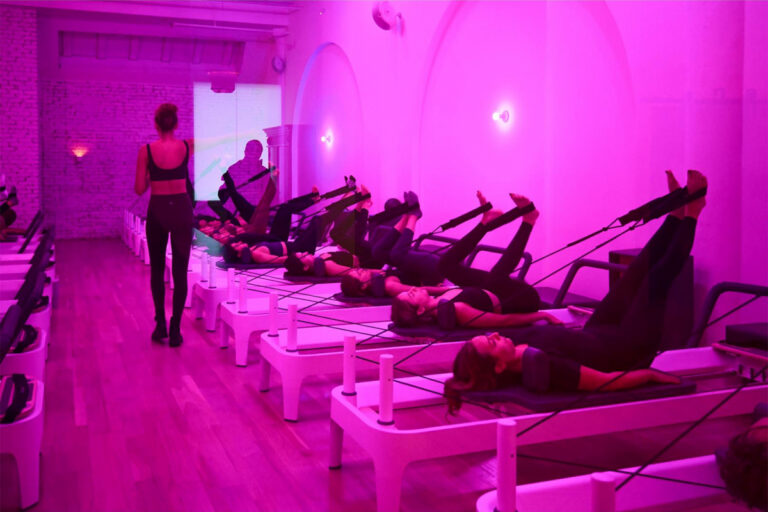
Choose measures that fit the result you care about. If you want stronger legs, notice how confidently you work through an exercise. If you want better control, pay attention to whether you can move the carriage smoothly and keep breathing.
If visible change is part of your goal, you might track how clothes fit, optional photographs, or waist measurements taken consistently over time. Your waist may be one place you notice change; where and when that happens varies.
One useful clarification: BMI is a weight-to-height screening measure, not a muscle-to-fat test. The CDC explains that BMI cannot distinguish fat, muscle, and bone mass. If you want to understand body composition, ask a qualified professional which assessment is useful and how to interpret it.
Make your first month a check-in
Write down the classes you attended, an exercise that felt different, your energy, and how well you recovered. Compare your experience with where you started. A steadier movement or a little more strength may be easier to recognize in a short note than in a mirror.
If you feel stuck, bring that record to your teacher. Explain your goal and ask what to work on next. You may need a clearer cue, an appropriate progression, a more consistent routine, or more recovery. A month is a useful check-in, not a deadline your body has missed.
Notice the power in how you move
We love the kind of progress that changes how someone uses their body: more power through the legs, a more supported center, and a sense of grace and ease in movement. You can be working hard and learning to move more fluidly at the same time.
That is a practice worth building. Choose a New York Pilates studio that fits your day, explore the current intro offers, and find your next class. Give yourself something more useful to track than time passing: a routine you can return to, and a body you are learning to use with confidence.
Related Reading
Pilates For Beginners: Learn The Basics & Mistakes To Avoid · Mat Pilates vs. Reformer Pilates: What’s the Difference?
From The Pilates Edit, the editorial publication of New York Pilates. Meet the founders.