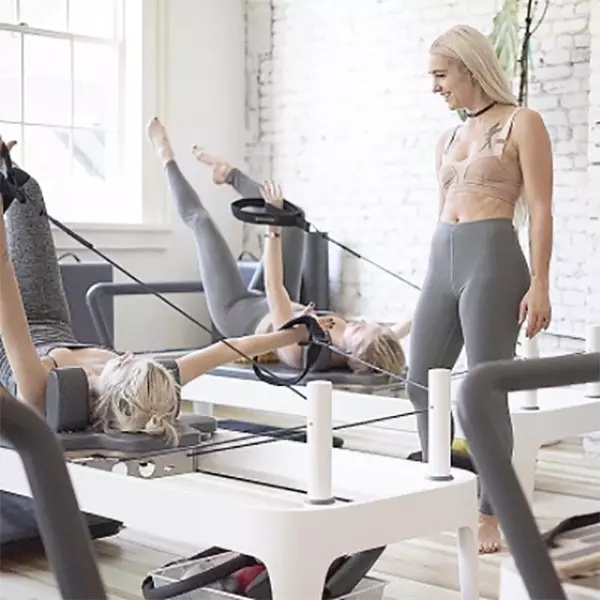
The biggest difference between mat Pilates and reformer Pilates is what you work with. On the mat, your body weight and gravity provide the main resistance. On the reformer, springs and a sliding carriage give your teacher another way to assist a movement or make it more demanding.
At New York Pilates, we love that flexibility. The same machine gives someone learning the method a place to begin and an experienced student room to progress. And there is something joyful about the way it slides and glides: the movement itself can make you want to come back.
What the reformer adds to Pilates
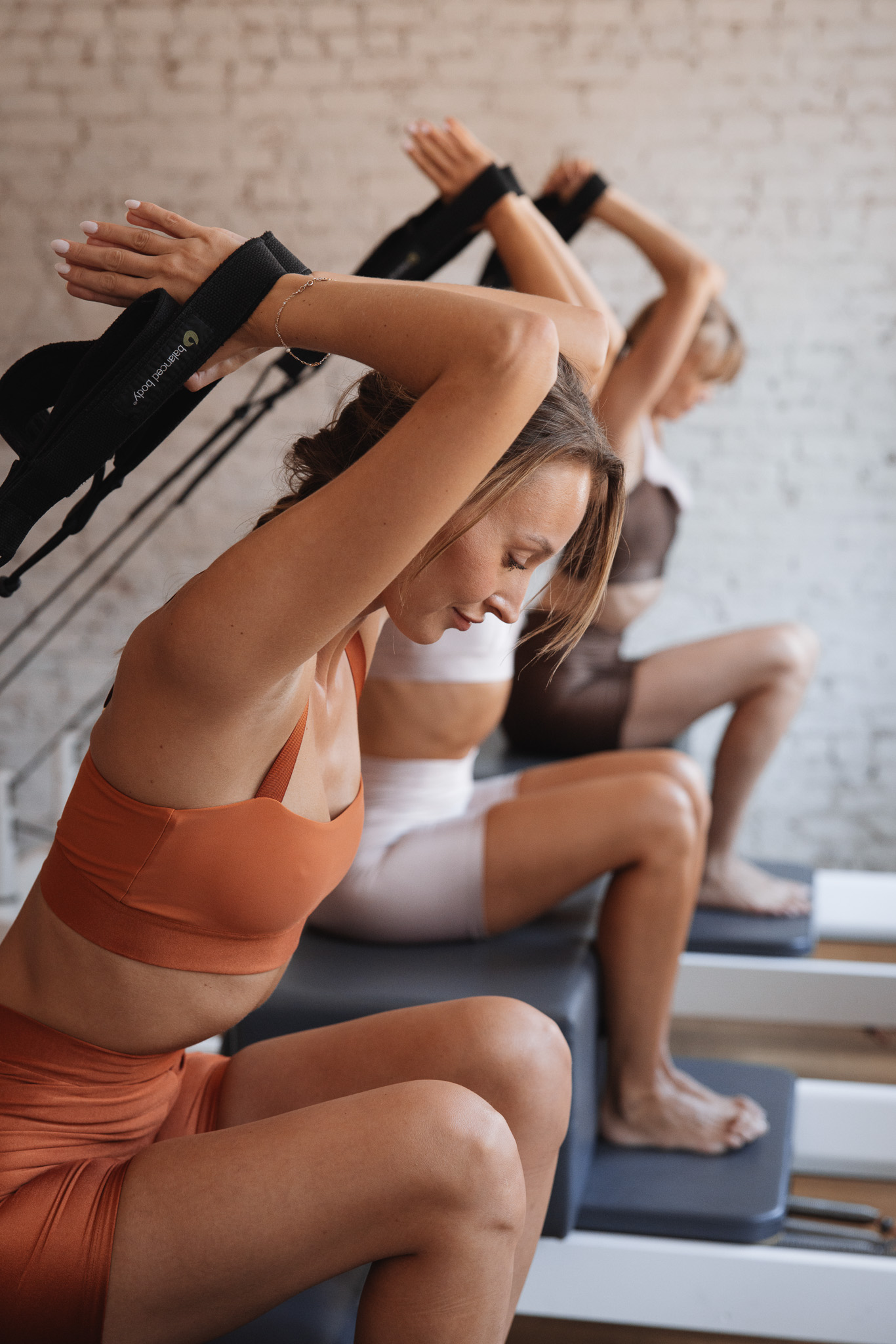
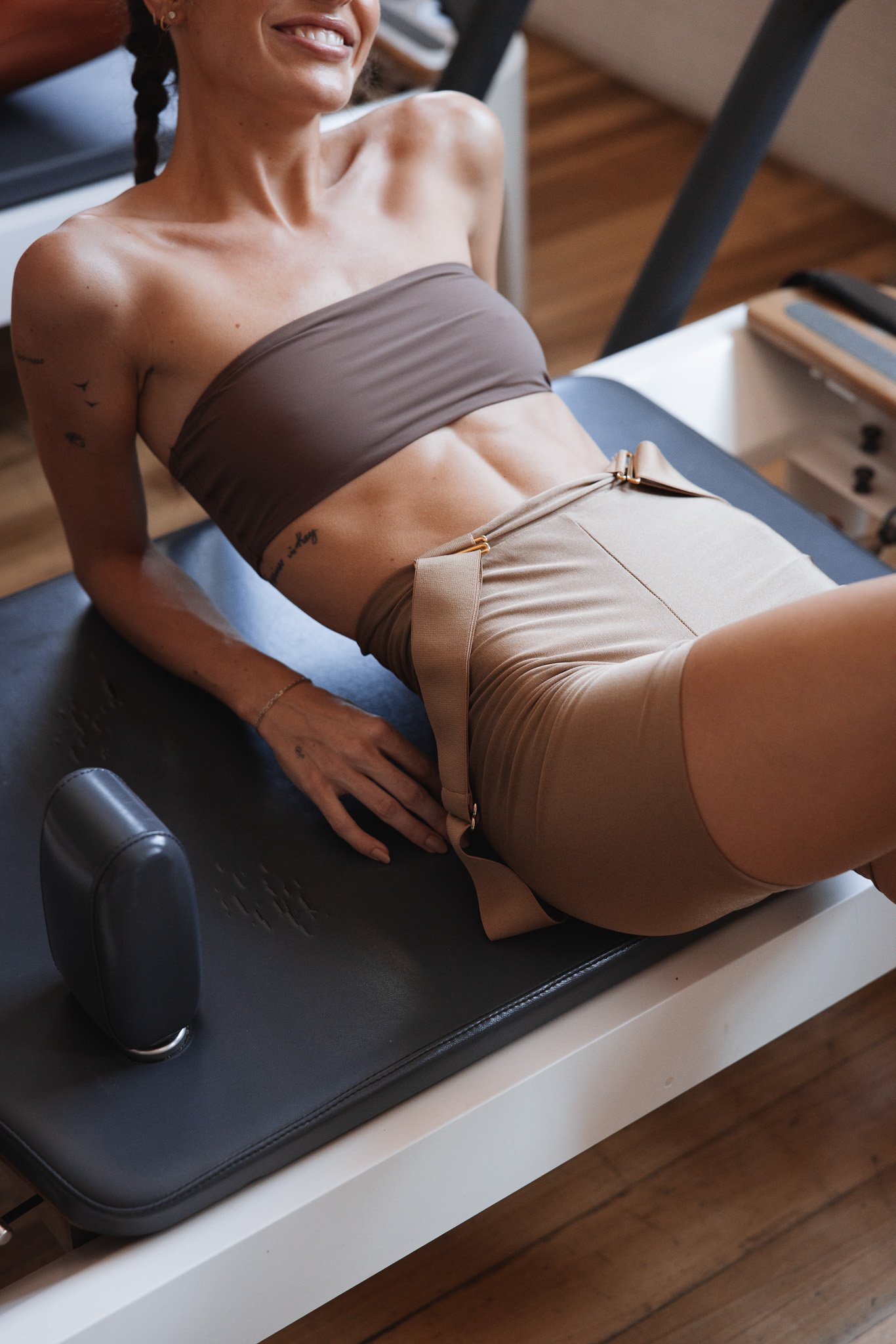
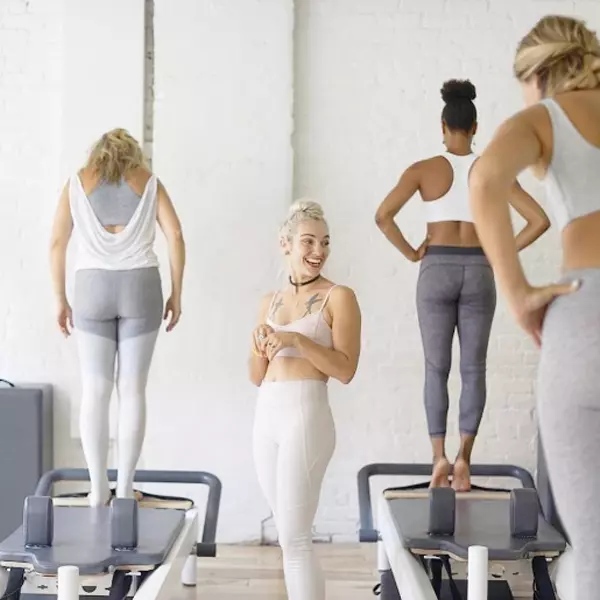
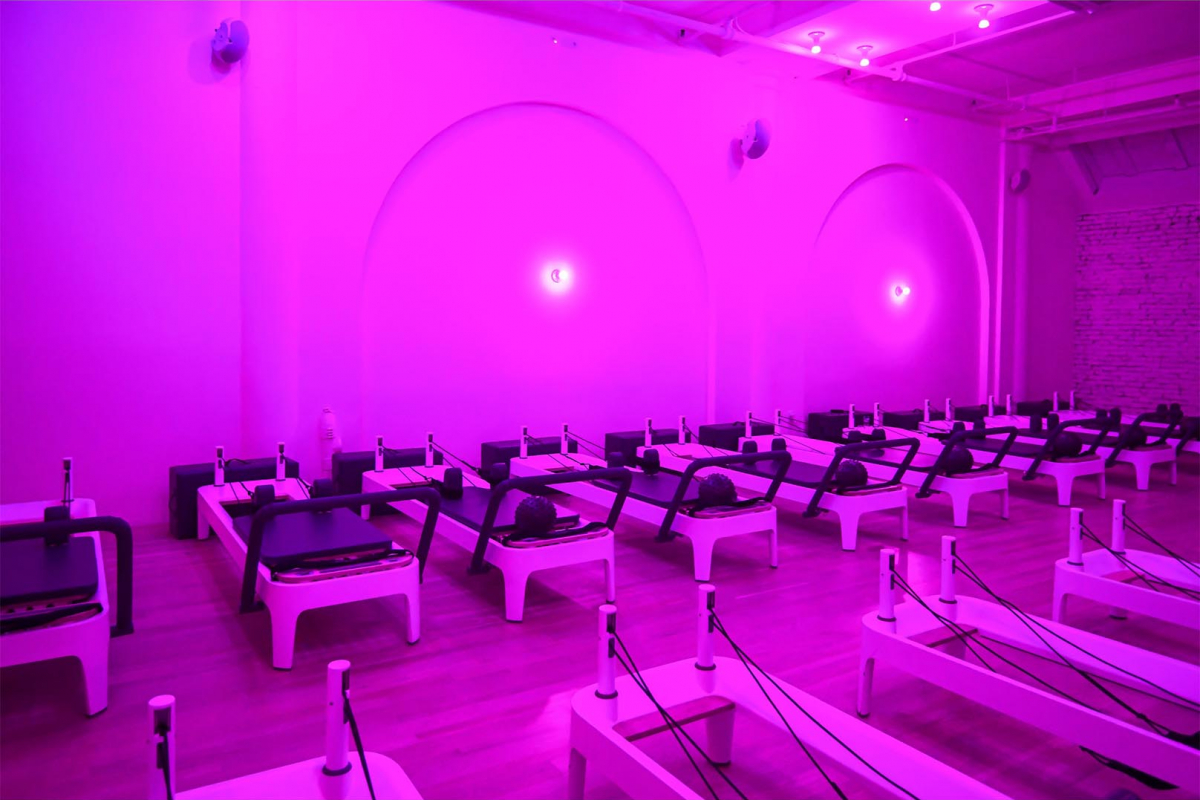
A reformer has a moving carriage, springs, a footbar, and straps. Depending on the exercise, you may work lying down, seated, kneeling, or standing. The setup changes how you experience resistance and support.
Balanced Body’s reformer guide explains that springs can assist movements that are difficult on the floor, as well as add resistance. Mat and reformer work are complementary parts of the Pilates method.
That is what makes the reformer so interesting to us. Assistance gives you a chance to practice a movement with support. Resistance gives you something to work against. Your teacher helps you find the version that makes sense for your body today.
Why mat Pilates can feel harder

Mat Pilates is strength training, too. Your own body creates load. Without the reformer’s springs, you have to manage the movement with the support available from the floor, your body position, and any props you use.
For example, holding your legs away from your torso in a mat exercise can ask a lot of your abdominal control. Changing the position or bending the knees may make the movement more accessible. An instructor can help you choose that adjustment.
A simple-looking mat exercise can be demanding. Having less equipment does not automatically make the workout easier. It also does not mean every beginner needs constant assistance: a well-taught mat class can introduce the method gradually.
More springs do not always mean a harder exercise
Spring resistance gives the reformer options, but those options need context. A heavier spring can increase the work in one exercise and provide more support in another. A lighter spring may require you to control a carriage that moves more freely.
As Balanced Body’s explanation of springs describes, spring resistance changes with extension, and lighter settings can increase the demand for control. Springs are not interchangeable with fixed dumbbell weights.
At NYP, we want you to understand what you are doing, not simply choose the most springs. Follow your instructor’s setup and ask about modifications or advancements. The goal is a movement you can perform with intention, alignment, and breath.
The advantage of a practice you can take anywhere
Mat Pilates has a practical strength: you can take it with you. Once you understand your exercises and appropriate modifications, a mat and enough space can give you a way to keep moving while traveling or at home. Some classes also use bands, balls, or other small props.
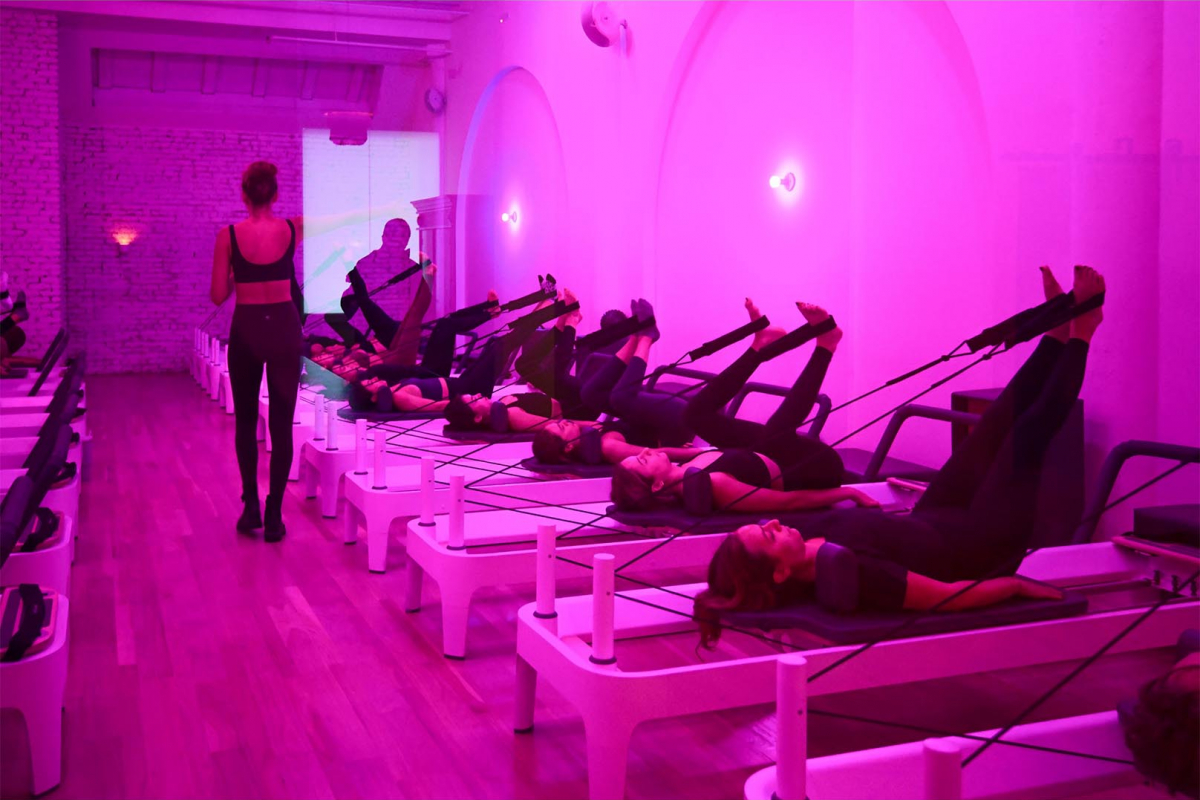
That portability does not make it the same experience as a reformer class. The moving carriage, spring feedback, and studio instruction are part of what you are choosing when you come to NYP. We would not describe mat Pilates as a cheaper version of the same workout.
Why we love the reformer at New York Pilates
The reformer gives movement a fluid quality. You move the carriage out and bring it back with control. You learn to coordinate your breath with the exercise and notice how a small adjustment changes the experience.
We want class to feel like something you enjoy learning. Our focus is Pilates: experienced teaching, clear cues, and a practice you can build over time. The machine gives us options; the teacher helps you use them.
You do not need to complete mat Pilates before trying a suitable reformer class. Start with an introduction to the equipment and let your teacher know you are new. Read our guide to breathing in Pilates for another part of the method you will learn along the way.
Explore the NYP class schedule and membership options. Interested in teaching the relationship between support, resistance, and movement? Learn about our instructor training.