
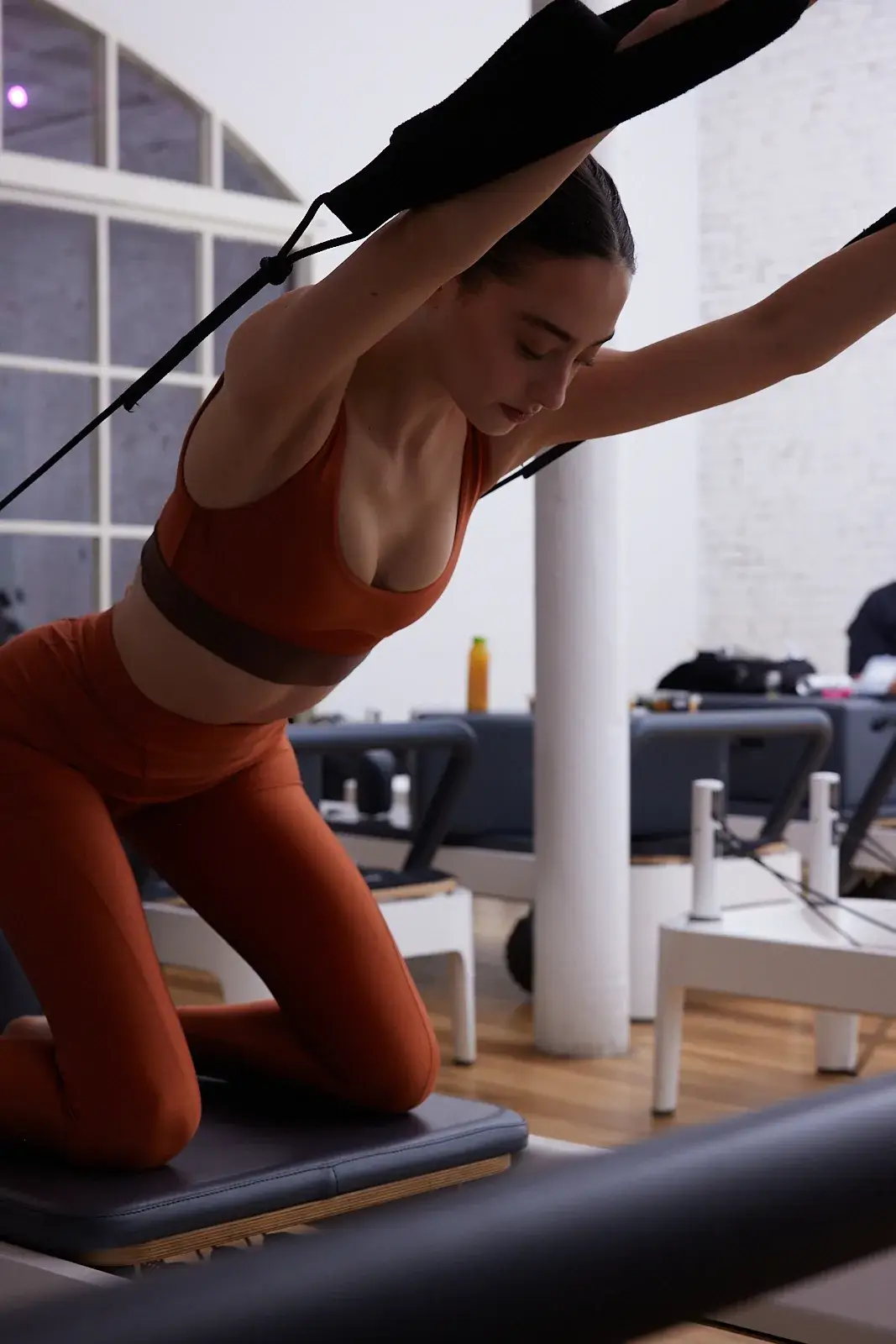
Pilates form corrections help you understand and perform the exercise. At New York Pilates, we see that attention as a central part of what you are paying for: a trained teacher observing your movement and helping you make it more intentional.
You might be doing a squat, a leg circle, a plank, or an abdominal exercise. The question goes beyond whether you have completed the repetition. How are you aligned? What is moving? What are you keeping stable? Are you breathing through the work?
How Pilates form corrections give an exercise purpose
Pilates combines strength training with attention to movement. Balanced Body describes the method as emphasizing movement quality, mental focus, breathing, and alignment. An instructor’s cue helps you apply those ideas to the exercise you are doing.
A correction may change your setup, reduce your range, adjust your spring choice, or bring your attention to a part of your body you had not noticed. It gives you a specific task you can practice.
If you rush through a movement or lose the intended position, you may miss the purpose of the exercise. That does not mean one imperfect repetition erases your progress. It means there is an opportunity to learn a more useful way to do the work.
What an experienced teacher is watching

Your teacher looks at how you organize your body as you move. Depending on the exercise, they may watch the relationship between your pelvis and lower back, how your knees track, whether your shoulders are lifting, or how you control the carriage.
They also listen and respond. A cue that works for one student may need a different explanation for another. Good teaching includes finding language that helps you understand the movement in your own body.
At NYP, every instructor must meet our strict minimum of 400 hours of training before teaching on the floor. Our instructor standards include anatomy, alignment, and the NYP method. That investment in education supports the attention you receive in class.
A small shoulder correction can change your focus
If you are lifting your shoulders toward your ears, an NYP teacher might ask you to imagine a string gently drawing the crown of your head upward while your shoulders settle. The image gives you a way to explore a longer neck without forcing your shoulders down.
Then you try the movement again. Can you keep that organization while using the straps? Can you continue breathing? Does your neck feel less tense? Your teacher can help you notice the difference and refine the cue.
The useful change is something you can recognize and practice. A correction becomes more valuable when you understand what it is asking you to do.

How to respond when your teacher gives you a cue
Listen for one clear adjustment and try it on the next repetition. You do not need to solve every detail at once. If you are unsure, ask your teacher to explain or demonstrate what they mean.
Tell your instructor how the adjustment feels, especially if it is uncomfortable. Clear communication helps them choose another explanation or modification. Hands-on guidance should respect your comfort and consent; you can request verbal cues instead.
Being corrected is a normal part of learning, whether you are new or experienced. As an exercise becomes familiar, you may have more attention available for the details. You keep returning to the same principles with greater understanding.
Breath, form, and movement belong together
At NYP, Pilates is about breath and form in motion: concentration, precise adjustments, and fluid, functional movement. Small details help organize the larger exercise. They give your practice something to build on.
The teacher’s role is to connect those details to the work in front of you. You learn the setup, practice the cue, and begin to recognize the quality of your own movement. That is the value of instruction that goes beyond calling out exercises.
Explore our class schedule and membership options. For more on the preparation behind that teaching, read why instructor training matters. Interested in becoming an instructor? Discover NYP instructor training.
Related Reading
Pilates For Beginners: Learn The Basics & Mistakes To Avoid · Mat Pilates vs. Reformer Pilates: What’s the Difference?
From The Pilates Edit, the editorial publication of New York Pilates. Meet the founders.