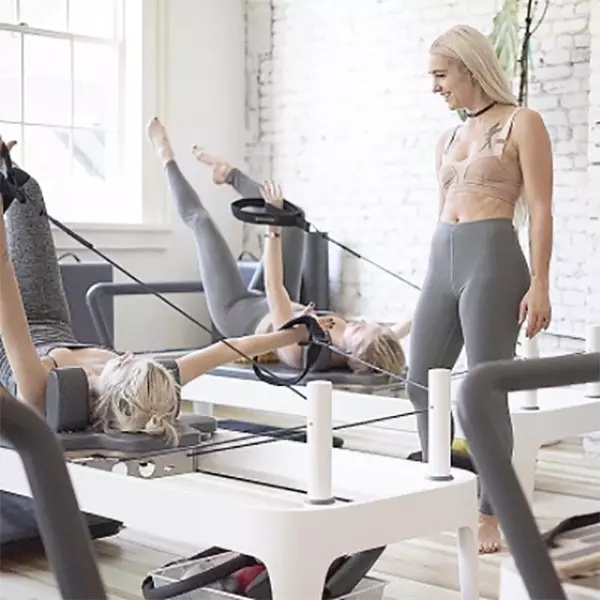
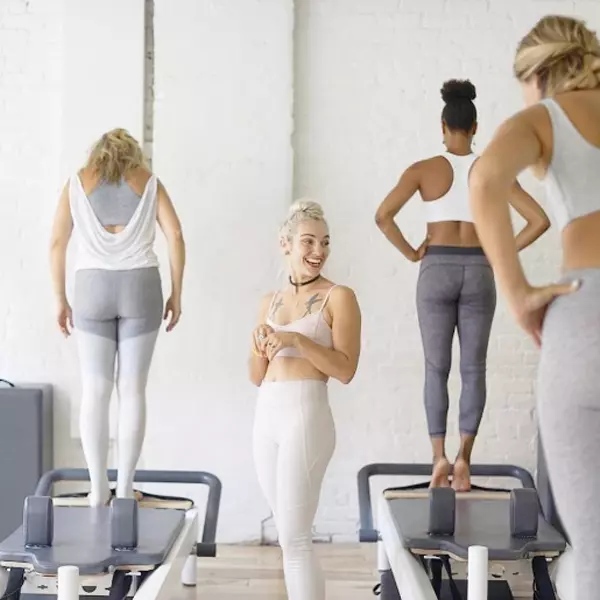
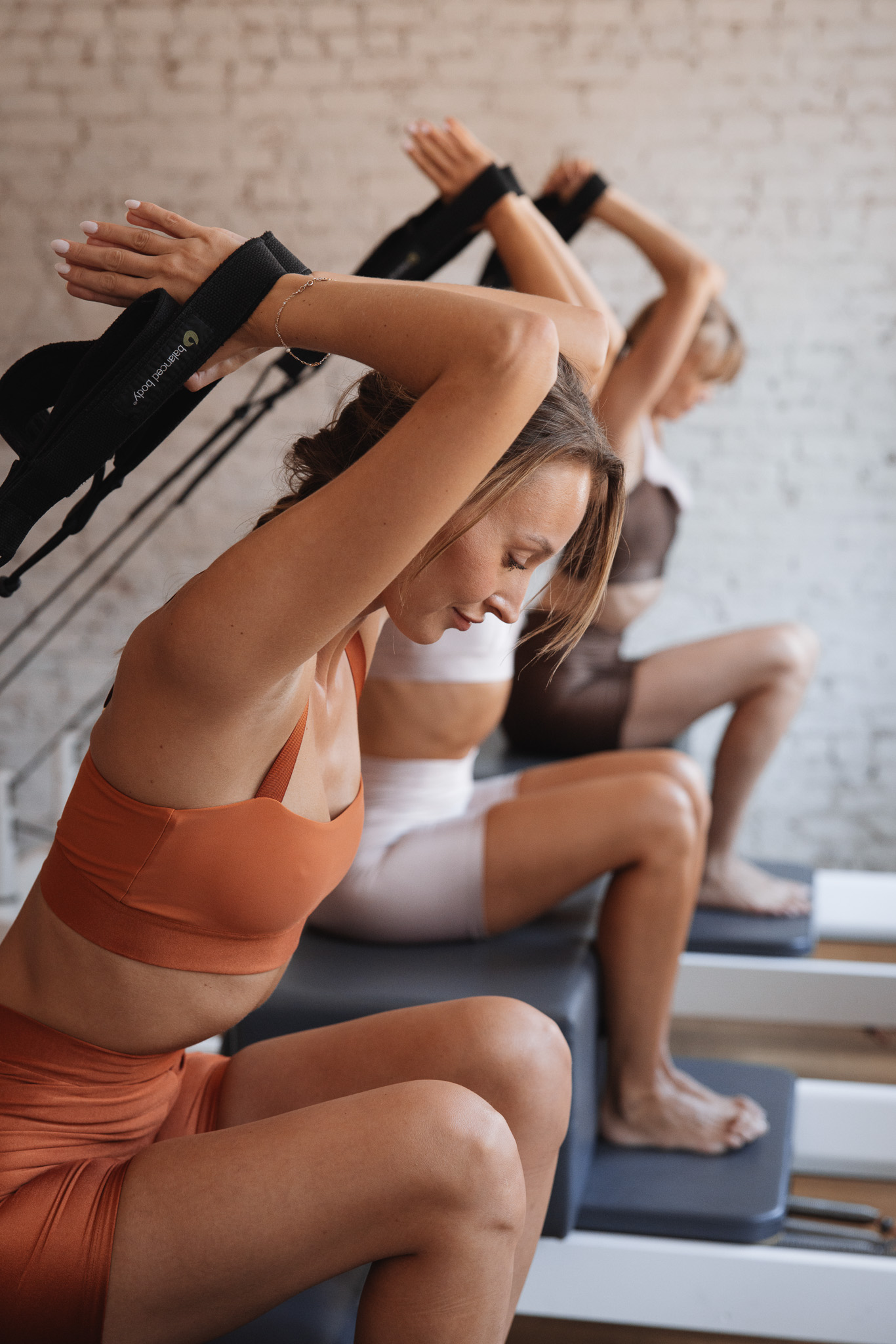
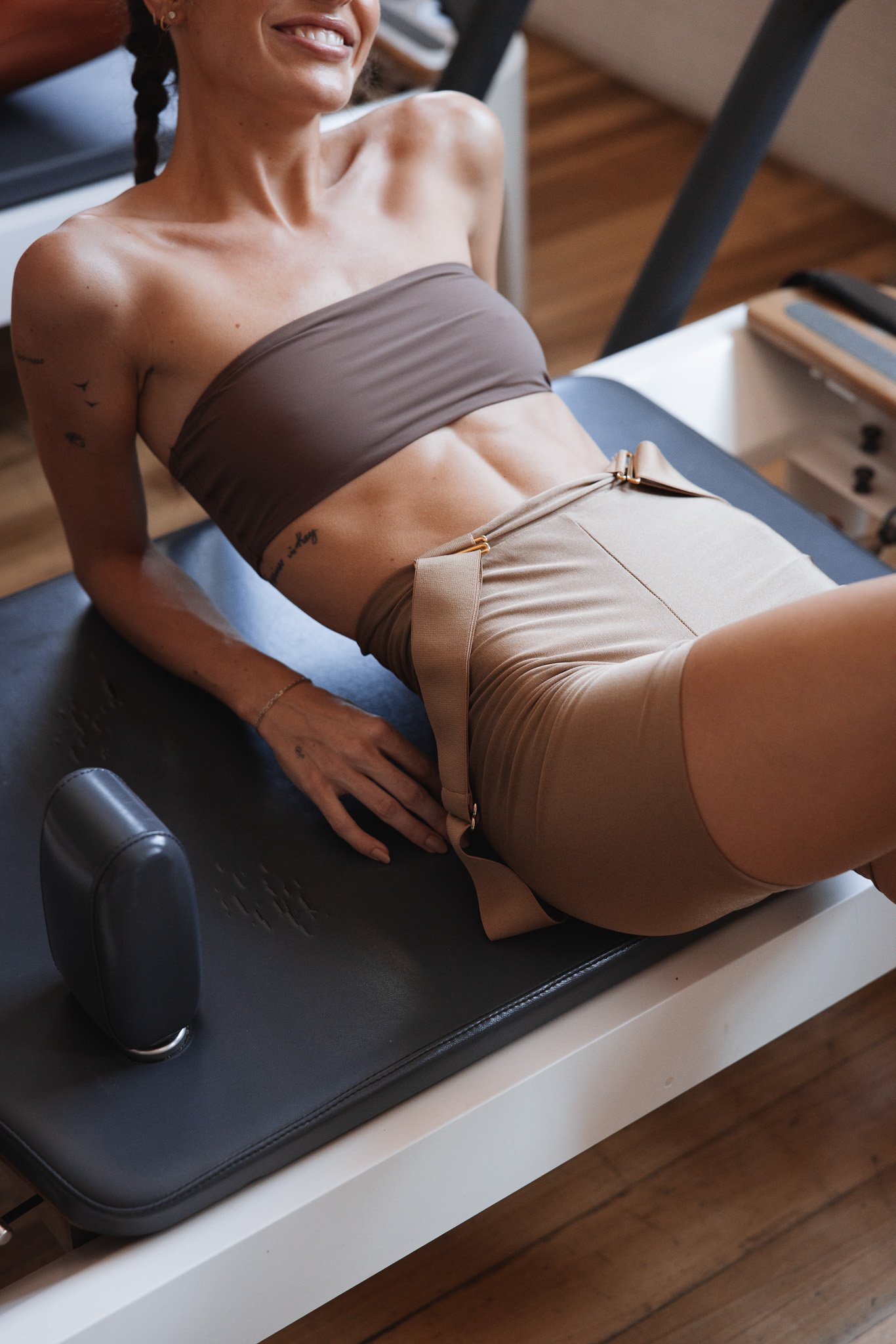
Classical and contemporary Pilates share a method, but they approach class structure differently. Classical Pilates follows an established repertoire and order. Contemporary Pilates allows more variation in the exercises and programming. At New York Pilates, that difference comes to life in Classical Flow and our signature Abs Arms Ass™ method.
We offer both because there is value in knowing a sequence deeply and in exploring different ways to move within a familiar framework. Repetition gives you room to refine. Thoughtful variation gives you another way to investigate the same movement goal.
What is classical Pilates?
Classical Pilates stays close to Joseph Pilates’s original exercises and the structure of his system, which he called Contrology. Balanced Body’s introduction to classical Pilates describes its emphasis on exercise order, control, precision, and coordinated breathing.
On the reformer, footwork is a familiar starting point in the classical sequence. Balanced Body’s classical reformer manual introduces footwork before the Hundred and subsequent exercises. That beginning gives you a place to connect with the equipment and pay attention to how you move.
Classical teaching still responds to the student. The repertoire you practice and the adjustments you need depend on your experience and ability. An established order gives the session structure; your instructor helps you work within it.
Why repeat a familiar sequence?

At NYP, we see repetition as an opportunity to build expertise. The first time you encounter an exercise, much of your attention may go toward learning the setup. Once it becomes familiar, you can notice more: how you use your breath, whether your shoulders are lifting, or how smoothly you control the carriage.
You return to a movement you recognize, but you bring more understanding to it. Familiarity gives you a useful reference point. You may notice that a transition feels clearer or that a cue finally makes sense. That is part of the appeal of Classical Flow.
How NYP approaches contemporary Pilates
Our contemporary Abs Arms Ass method was built from classical concepts. It has a deliberate progression through class, with space for variations inside that framework.
Think of a squat. There is a recognizable movement goal, but your teacher can choose different squat variations and ways to organize the exercise. You revisit the pattern without doing the exact same version every time.
That is how we think about creative programming: choosing variations for a purpose. We want you to understand what you are working on, feel the relationship between exercises, and keep developing your movement skills.
Our instructor training reflects that approach, combining classical and contemporary Pilates with practice in progressions, modifications, and communication.
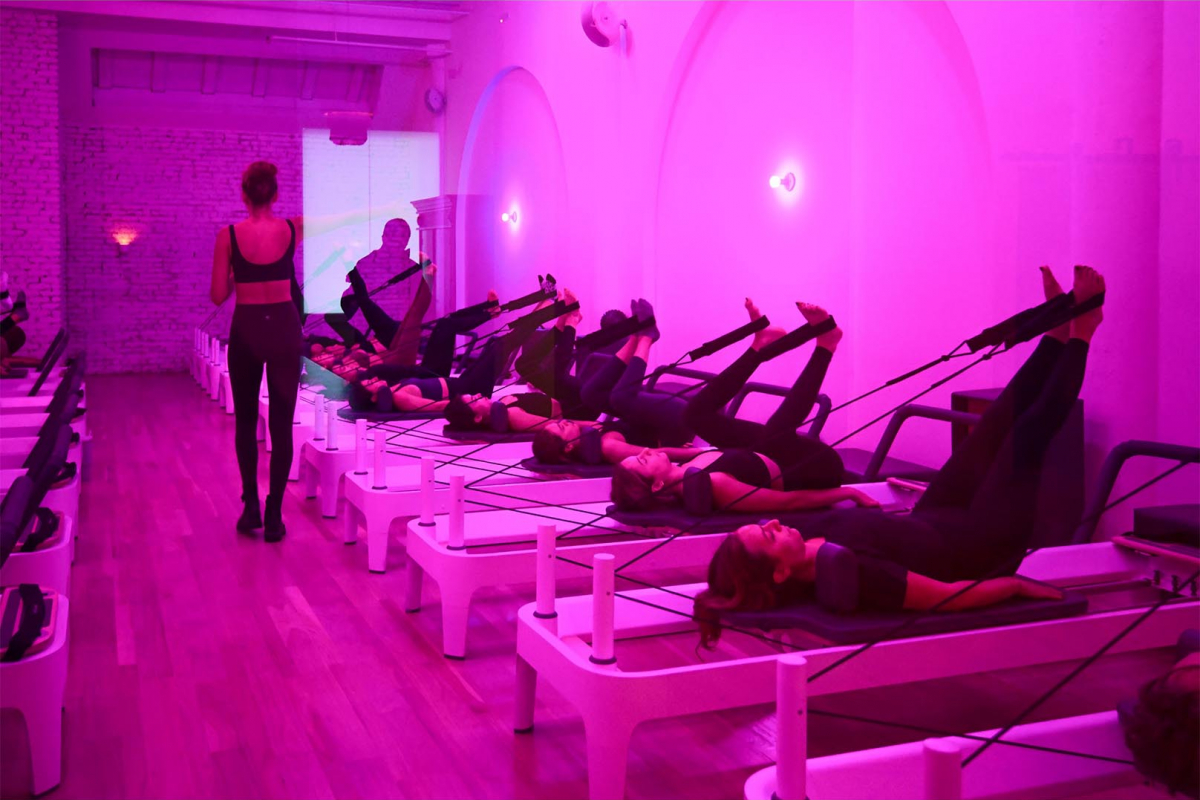
Classical Flow vs. Abs Arms Ass
Choose Classical Flow when you want to explore the classical repertoire and deepen your familiarity with its structure. At NYP, this is a more advanced class taught by our most advanced instructors. If you are unsure whether you are ready, ask our team before booking.
Choose Abs Arms Ass when you want our signature contemporary reformer experience: a consistent framework with variation, modifications, and advancements. You can expect your teacher to guide the class with attention to breath, alignment, and controlled movement.
Neither class asks you to stop paying attention because you know the exercise. In both, the work is in how you move. Reformer Pilates is strength training, and the method gives that work structure and intention.
One studio, two ways to deepen your practice
We introduced Classical Flow to give students a way to experience the repertoire that informs our contemporary method. You can explore its familiar sequence, then return to Abs Arms Ass with a clearer sense of those foundations.
The lights and music are part of the NYP experience. The heart of class is Pilates: a teacher helping you connect breath, form, and movement in a practice you enjoy returning to.
Explore our class schedule to find Classical Flow and Abs Arms Ass, and see our membership options. Interested in teaching these foundations? Learn more about NYP instructor training.