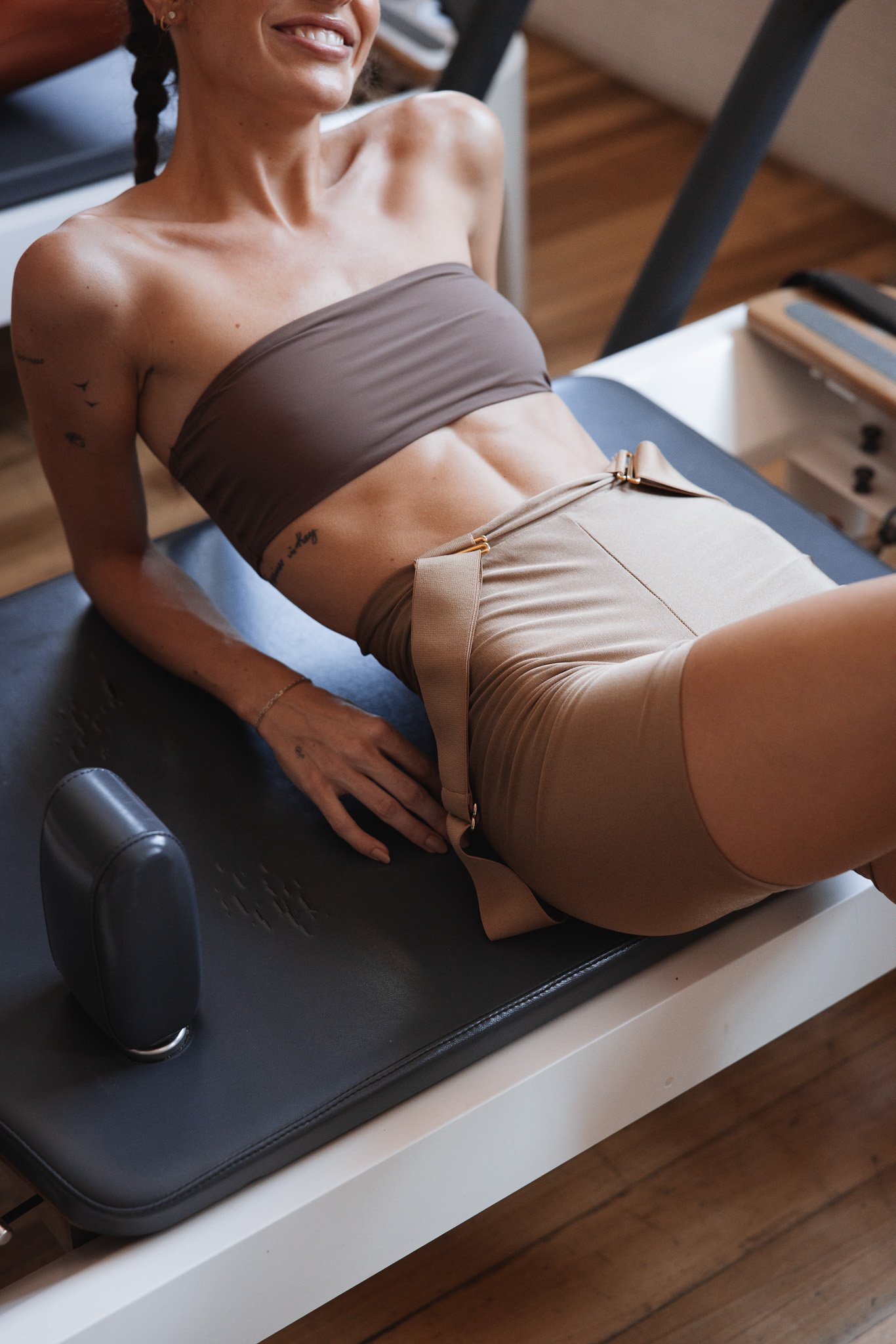
Choosing your reformer spring resistance starts with the exercise. A heavier setting can create more resistance when you push or pull against the springs. In movements where the springs help hold the carriage steady, a lighter setting can make control more challenging.
At New York Pilates, we want you to understand what your spring choice is doing. Reformer Pilates is strength training, and learning to manage both resistance and stability is part of that work. Your teacher helps you find a setting that supports the purpose of the movement.
Why lighter springs can feel harder
It is tempting to think of every spring change as a weight change at the gym. More springs must mean harder; fewer must mean easier. The reformer gives you another variable: a moving carriage that your body has to control.
In certain exercises, more spring tension helps keep that carriage from moving away. Reducing the tension gives you less of that support. You may feel a greater challenge even though you have attached fewer springs.
An instructor writing in Balanced Body’s spring guide describes how lighter spring settings can demand more control. That is one reason spring choices depend on the movement. NYP uses Balanced Body equipment, and we teach you to work with the machine rather than simply count springs.
Planks: less support can mean more core work

A reformer plank makes the relationship between support and control easy to notice. In the plank variations we teach, a heavier spring setting can offer more support against unwanted carriage movement. A lighter setting can increase the challenge of keeping your torso organized and the carriage controlled.
Your abdominals help you maintain that position. The goal is to hold your form while breathing, rather than let the carriage slide farther just to make the exercise feel harder. Your teacher may recommend more support while you learn the setup, then adjust it as your control improves.
A supported plank is still strength training. The spring choice helps you practice the movement with the right level of challenge.
Bridging: a different challenge for the hamstrings
Bridging offers another example from NYP classes. When the exercise asks you to keep the carriage steady, a heavier setting can make that task more supported. With less spring support, your hamstrings may have to work harder to help control it.
For a particular bridge variation, an NYP teacher might compare three red springs with one red and one blue. The lighter combination can make carriage control more demanding. These are examples of how we teach the movement, rather than a setting every student should copy: your setup, the reformer, and the version of the exercise all matter.
Ask your teacher what you are trying to keep still and what you are trying to move. That question often makes the spring recommendation easier to understand.
How to choose your setting in class
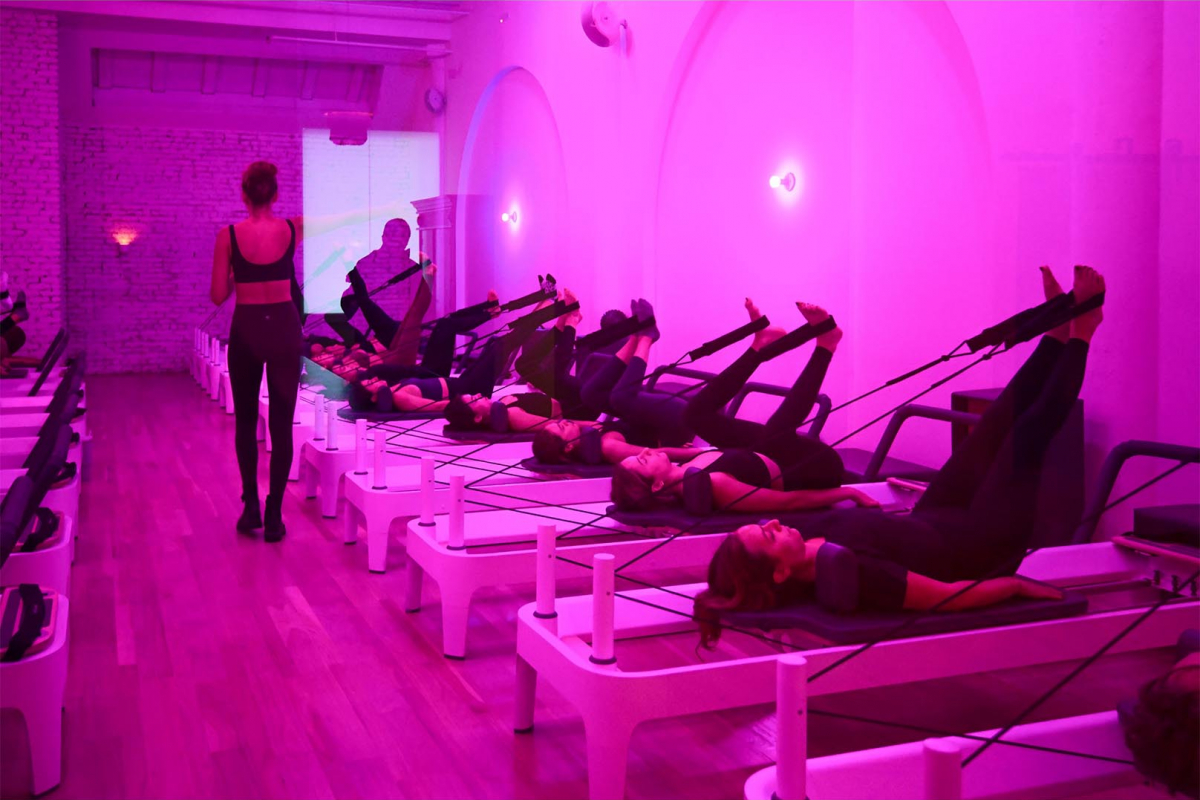
Start with your instructor’s recommendation. Notice whether you can control the movement, maintain your alignment, and keep breathing. If the carriage feels difficult to manage, or you cannot complete the movement with the intended form, ask for an adjustment.
Do not use the person beside you as your spring guide. Different bodies and different levels of experience can need different support. A useful progression might involve changing springs, refining your range, or learning to move more smoothly.
At NYP, every instructor meets our strict minimum of 400 hours of training before teaching on the floor. That education supports the observations and corrections you receive. Explore why your Pilates teacher corrects your form for more on how that attention helps you learn.
Learn the reformer through practice
The aim is to understand your movement and build a practice you can return to. Sometimes that means adding resistance. Sometimes it means using more support. Sometimes it means reducing spring support so you can work on stability.
Explore our class schedule and membership options to find your routine. Interested in teaching these decisions? Learn about NYP instructor training.