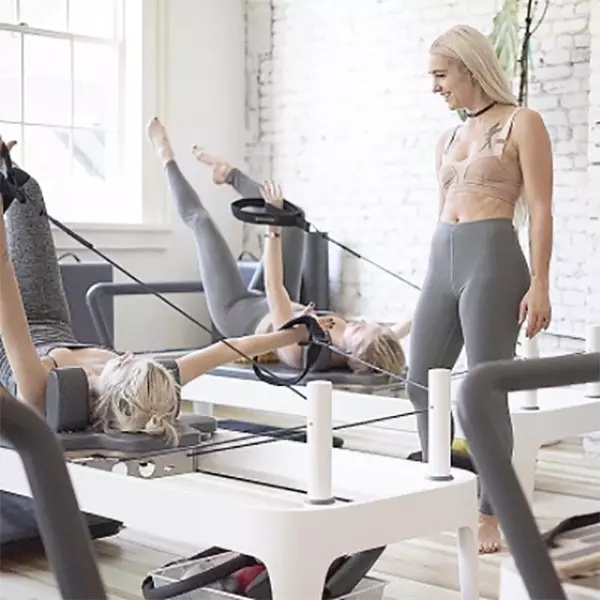
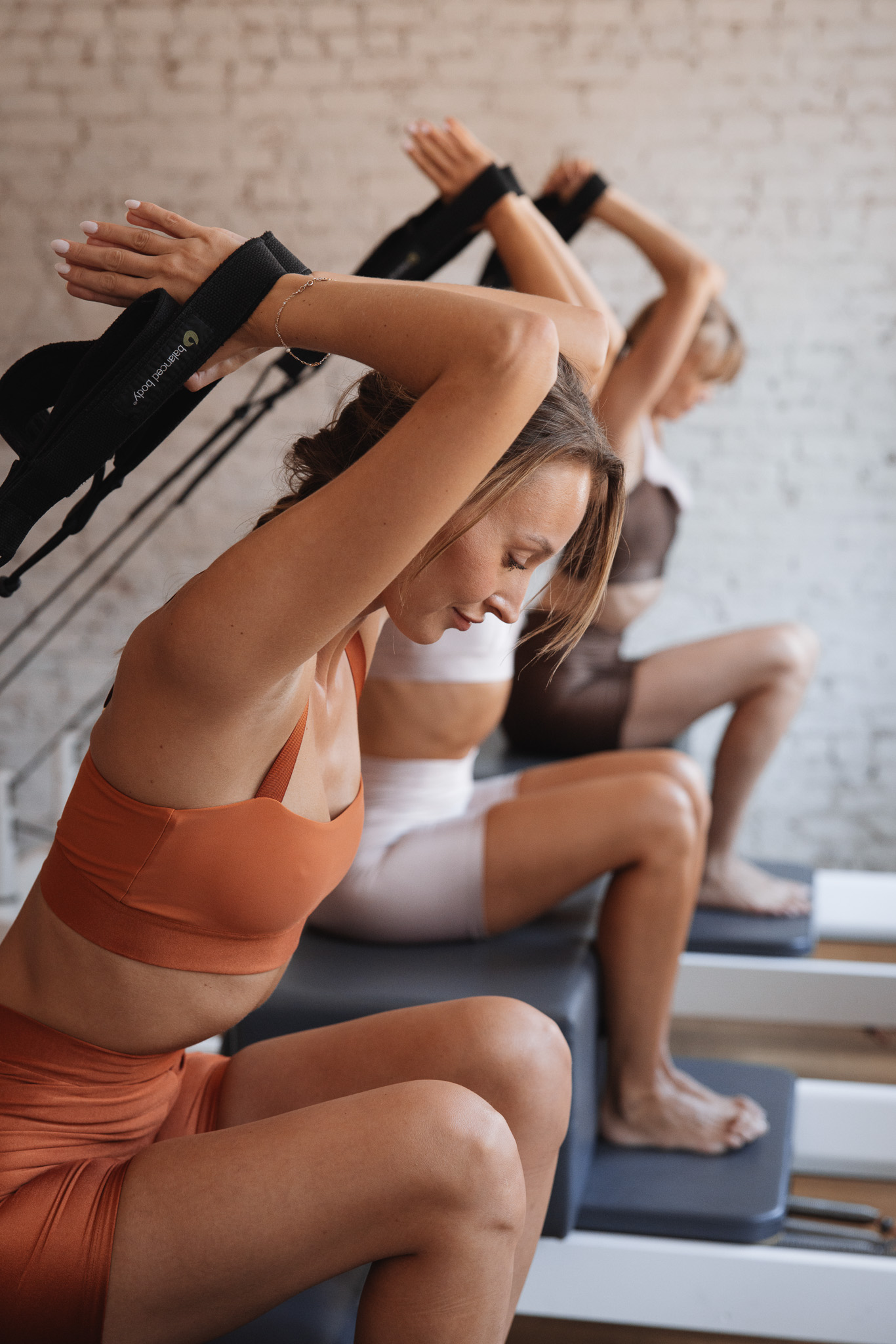
Breathing in Pilates is part of the workout. At New York Pilates, we pair movement with breath to help you find rhythm, pay attention to your form, and keep working with intention. Reformer Pilates is strength training; breathing is one of the skills that helps you organize that work.
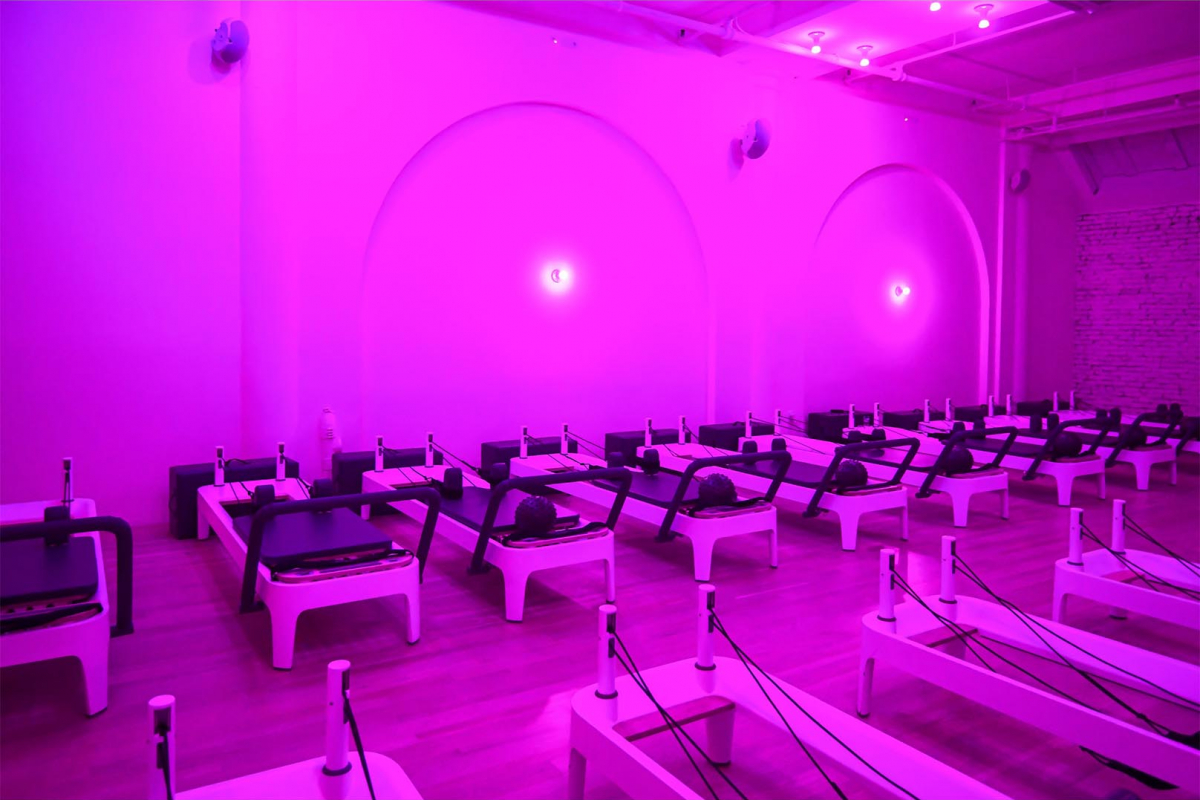
Our pink lights and music make class fun. Underneath that atmosphere is a contemporary Pilates studio grounded in classical principles: control, concentration, alignment, and coordinated movement. Breath belongs at the heart of that practice.
What oxygen does for your muscles
When you inhale, oxygen moves from your lungs into your blood. Your circulation carries it to tissues throughout your body. As the National Heart, Lung, and Blood Institute explains, your cells use oxygen in the processes that release energy, while carbon dioxide travels back to your lungs to be exhaled.
That process reaches your mitochondria. These structures help produce ATP, the usable energy that supports muscle contraction and many other cellular activities. Oxygen supports this energy production; it is not itself the fuel. The biology of mitochondria gives a concrete explanation for something you feel in class: your breathing and your movement are connected.
Carbon dioxide needs balance

Carbon dioxide is a normal product of metabolism. Your body continually adjusts breathing to its needs. The goal is comfortable, appropriate breathing, rather than taking the biggest possible breath at every opportunity.
Breathing too rapidly or deeply can lower carbon dioxide excessively and cause lightheadedness or tingling, according to MedlinePlus. In Pilates, follow your teacher’s breathing cues without forcing the breath. If a pattern feels confusing, begin with steady breathing and ask for help.
Does breathing clear lactic acid?
Lactate is a useful energy source that your body can produce and use even when oxygen is available. It is not simply waste you need to flush out. Research on the lactate shuttle describes how lactate moves between tissues and can be used as fuel.
You do not directly breathe lactate out. Breathing supports the processes that use oxygen, but a breathing cue is not a lactic-acid cleanse. It also does not guarantee that you will avoid soreness. A better focus is learning a movement you can control and a practice you can repeat.
Breathing, attention, and stress
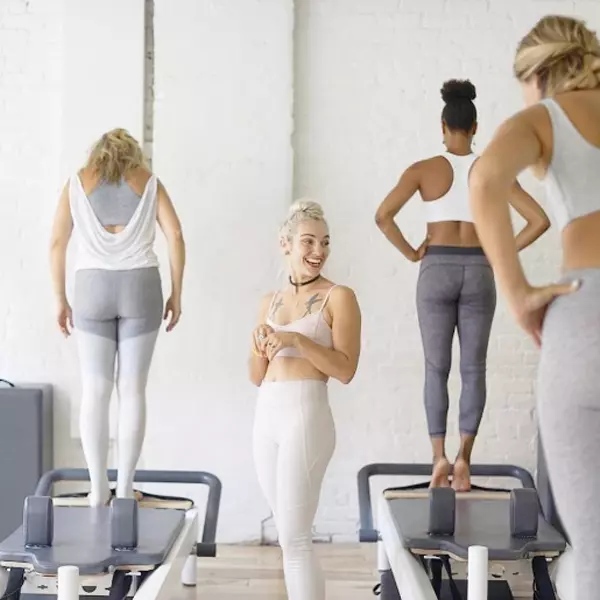
Paying attention to breathing gives your mind something specific to follow. Instead of rushing through a repetition, you notice when you inhale, when you exhale, and whether your shoulders or jaw are holding unnecessary tension.
There is research behind breathing as a stress-management practice. In a small randomized study of 40 healthy adults, eight weeks of guided diaphragmatic breathing improved attention and reduced negative affect and salivary cortisol in the intervention group. That finding does not establish that oxygen alone lowers cortisol or that every Pilates class produces the same effects.
At NYP, the practical goal is to stay present while you work. You can make an effort without making every repetition a struggle. Breath can be an anchor for that experience.
How breath creates rhythm in Pilates
Your teacher may pair an exhale with one phase of an exercise and an inhale with another. The pattern depends on the movement. It gives the exercise a rhythm and helps you coordinate your body rather than simply count repetitions.
Balanced Body’s account of classical Pilates breathing describes breath as an important part of Joseph Pilates’s teaching and explains that patterns can vary. You do not need to master every pattern in your first class. Start by noticing whether you are holding your breath, then learn the timing with your instructor.
Breath also invites inward attention. Some people describe that experience through spiritual imagery such as a “third eye”; that is a metaphor for awareness, rather than a biological explanation of oxygen delivery. In our Pilates classes, we bring your attention back to how you breathe, align, and move.
Experience the method at New York Pilates
Breath, form, and flow are part of what we teach. Our Classical Flow class offers advanced students a way to explore the classical repertoire with our most advanced instructors. It complements our contemporary approach by bringing those foundations into focus.
Explore the NYP class schedule and membership options. If you want to learn how to teach breath and movement together, discover our instructor training.