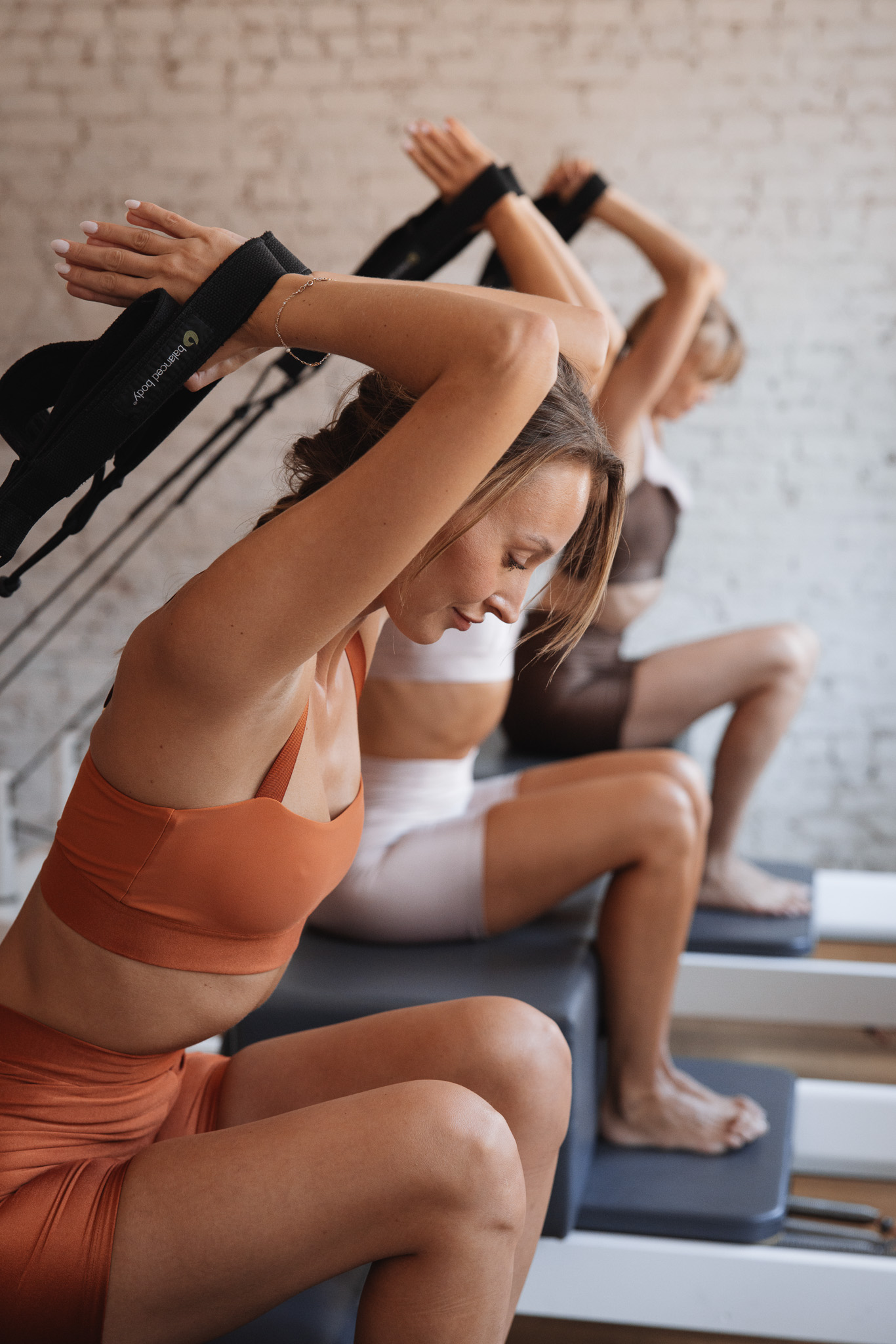
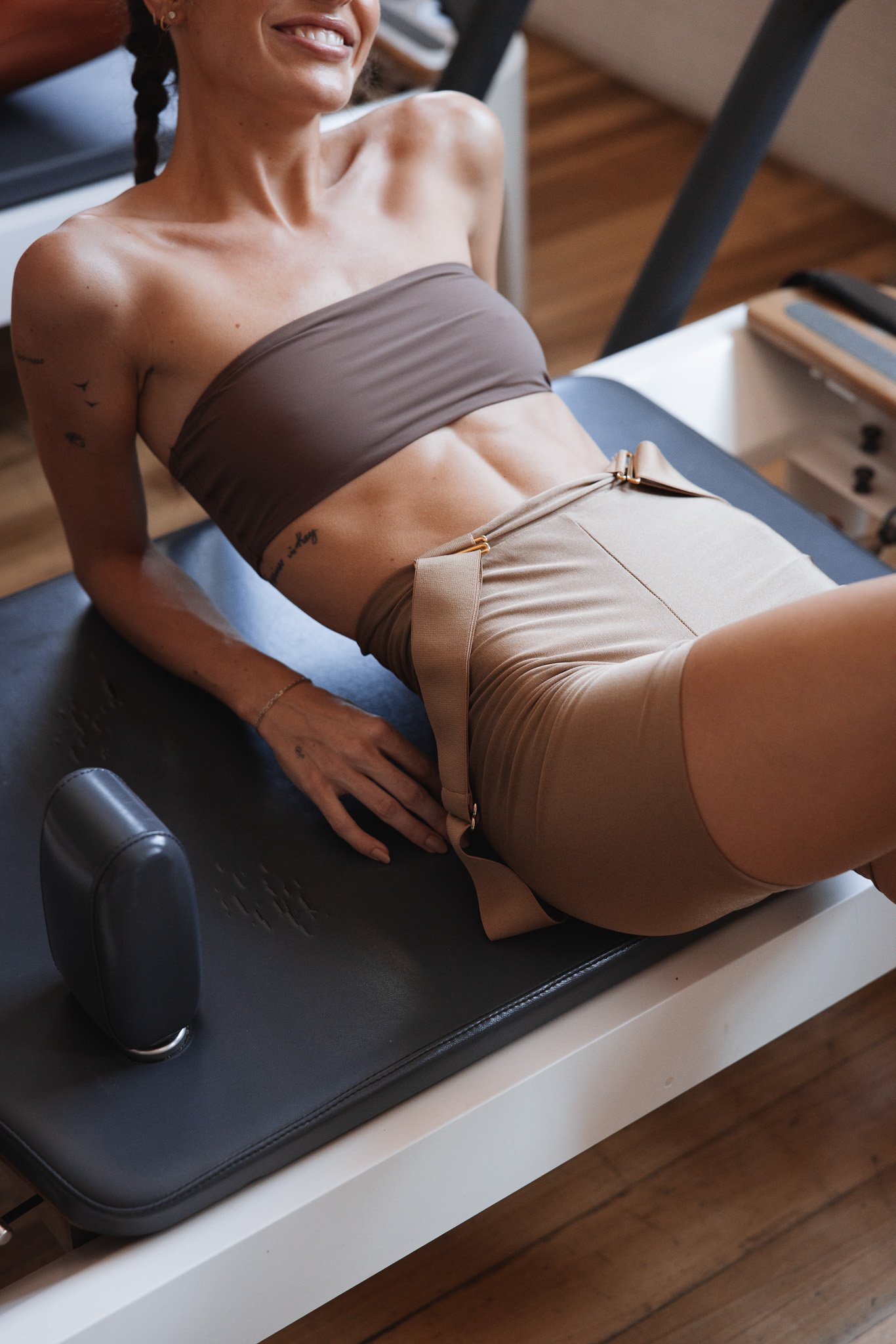
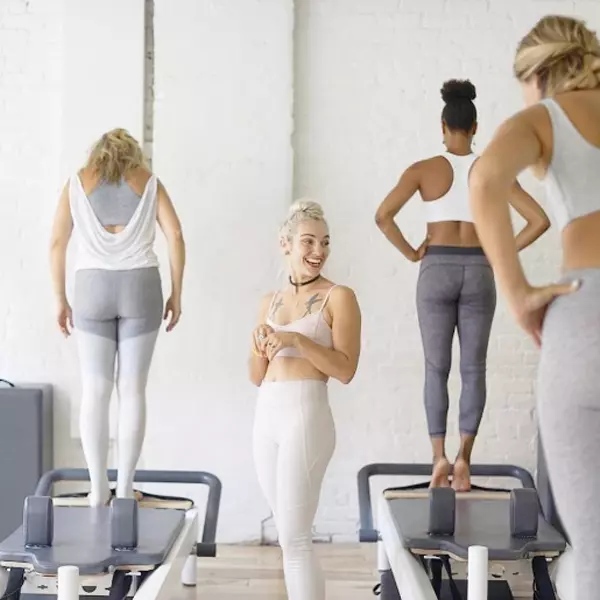
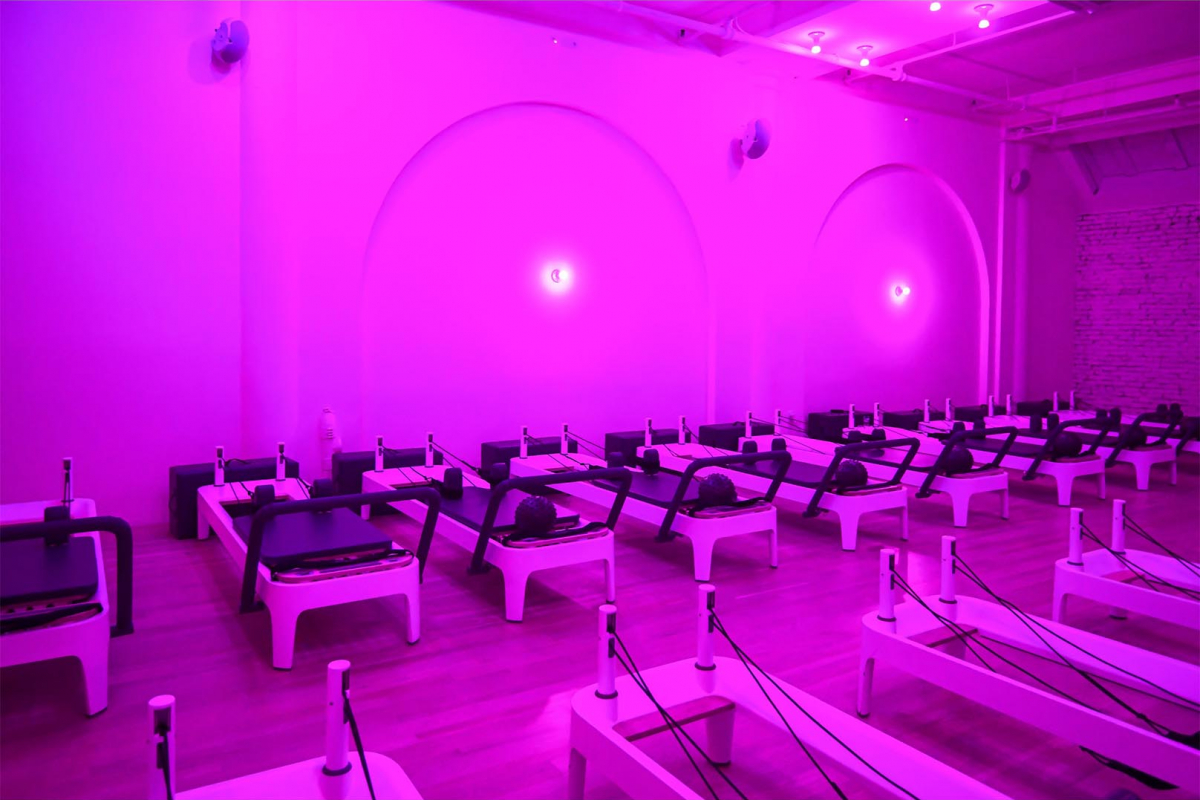
Yes, Pilates can help improve your posture. At New York Pilates, we focus on learning how your core, torso, shoulders, and pelvis work together, so you can carry that awareness beyond the studio. The aim is to feel supported when you move and stand, rather than simply forcing yourself to look upright.
If you spend much of your day at a desk, you may recognize the habit of lifting your shoulders or letting your head drift forward. Our classes give you time to notice those patterns and practice moving with more attention to alignment.
How Pilates trains posture
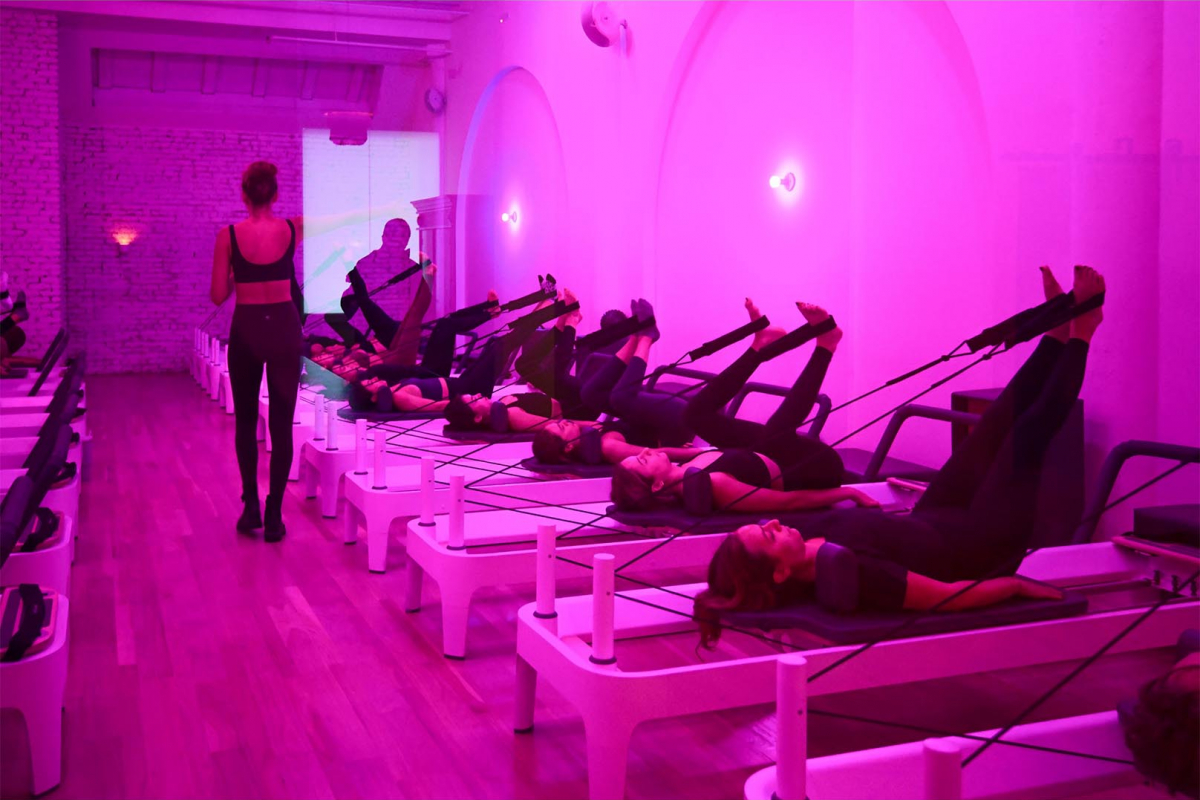
Reformer Pilates is strength training. Spring resistance, body weight, and controlled movement challenge your muscles while you practice organizing your body through each exercise. At NYP, core work is part of that whole-body technique, alongside breathing and control.
Heather Andersen’s approach emphasizes learning to support your torso and noticing where you hold unnecessary tension. A teacher’s correction can help you recognize the difference between completing a movement and completing it with the form you are practicing.
That awareness matters outside class, too. You can begin noticing whether your shoulders rise when you concentrate, whether you hold your breath, and how you position your pelvis when standing. The goal is a skill you can use in everyday movement.
What research says about Pilates and posture

A small randomized trial published in 2016 studied 28 sedentary women with forward head posture. After ten weeks, the Pilates group improved a measured angle of head alignment and neck range of motion. This supports the possibility of posture benefits, but the study did not test NYP’s classes or an increase in height.
A 2024 systematic review and meta-analysis also found potential improvements in several posture measures. For adults, the certainty of evidence was very low to low. Results depend on the person, the program, and the aspect of posture being measured; research does not establish a guaranteed result for every student.
Can better posture make you taller?
Standing with improved alignment may help you look taller. That is different from growing longer bones or guaranteeing an increase in measured height. Cleveland Clinic explains that improving posture can change how tall you appear, while stretching does not increase your actual height.
At New York Pilates, one student reported measuring two inches taller after becoming more upright, with the change attributed to improved posture by their doctor. This is an individual experience, not a typical or guaranteed result, and describes standing taller rather than growing longer bones.
At NYP, the useful goal is how you carry yourself: a supported torso, more awareness of your shoulders, and movement you can control. We encourage students to notice those changes rather than judging success by inches.
A cue to explore in class
When a student’s shoulders are shrugging, one cue we use is to imagine a string gently drawing the crown of the head upward while allowing the shoulders to settle. Think of space through the neck, without forcing your shoulders down or holding your body rigid.
Keep breathing as you make the adjustment. Your teacher can help you find an appropriate position for the exercise, check your pelvic alignment, and adapt the movement. A cue is a teaching tool, not a requirement to hold the same posture all day.
How to notice progress
Look for changes you can repeat: recognizing a shrug sooner, moving your arms while maintaining the position your instructor has taught, or standing with less effortful tension. Ask your teacher what they notice and which adjustments you should practice next.
Build a routine you can sustain. If you have persistent pain, unexplained height loss, or a diagnosed spinal condition, seek guidance from your healthcare professional about suitable exercise.
Explore our reformer class schedule and membership options to start your practice. Interested in the education behind our teaching? Visit NYP instructor training.